
PRECARIOUS
DREADFUL - EVENT #17
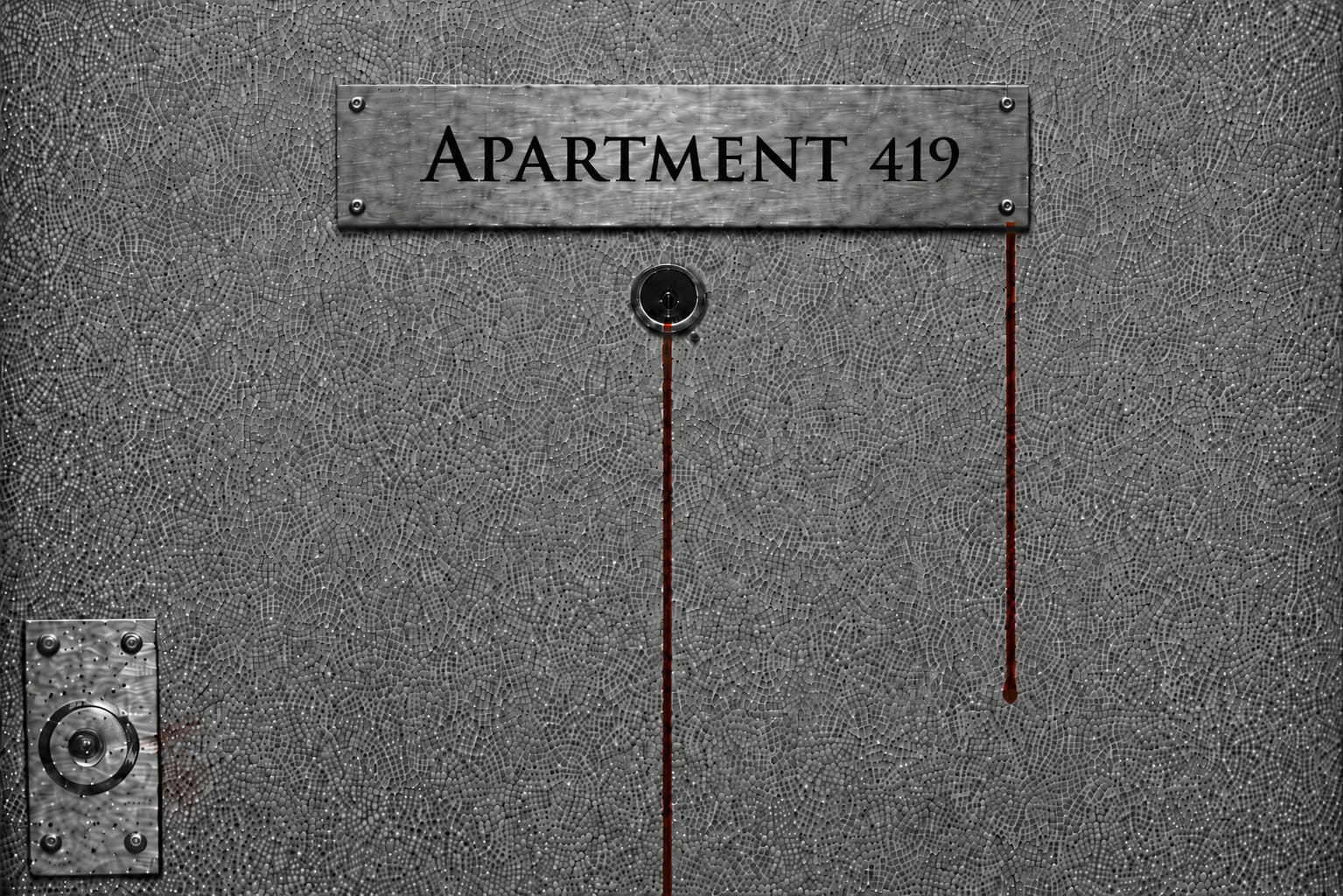
When this story ends, Jacari will be dead.
This shouldn’t come as a surprise, given the amount of carnage, death, and unending torment that has befallen even the strongest individuals tonight. For those who have survived so far (whether written about already or to come), their good fortune will last as long as a winter’s day. Like the other tales, this will build, build, build toward something until the narrative comes crashing down in a depressing heap that scatters pain and suffering across the surface, smearing the canvas and distorting the initial vision.
Considering your numbness to such discomfort by now, let’s see if this modification changes your demeanor:
When this story ends, Jacari, an innocent ten-year-old boy, will be dead.
Does that bother you more? Do you feel the gravitas of knowing that a poor, sweet soul will soon pass from this world?
Why would you?
Blink once. Blink again. Blink one more time.
Each time you did, countless children died. From famine, disease, terror, accidents, neglect, bad luck, misfortune, and so on. Children cease to be every second. It has been like this for centuries, perhaps even worse when filth, grime, and shortened lifespans were normal.
On an even greater scale, each time you blink, thousands upon thousands of adults die as well. And pets. Don’t forget about the pets.
So one impeccable boy no longer exists. Big deal. Tough break, kid. You scroll past death every day on social media. You watch films and shows where background characters are shot, stabbed, violated, and dismembered, and you are unfazed. You watch, unblinking and absorbed, thinking that you could do the same if your life were on the line. You are your own hero, not anyone else’s. You read about the worldwide suffering and think to yourself how glad you are that it isn’t you. War will never be at your doorstep. Food shortages will never impact you and your bubble of solitude. Even on the incredibly rare occasion that death takes away a loved one, you find a way to move on because that is what’s required to keep living.
One boy means little to you.
An entire complex of people means little more.
Go on, keep reading. There is so much more ahead. Go on, tell yourself that this isn’t real and that words on a page carry no significance. Go on, devour this dread.
Go on, continue to feel nothing.
It’s our best trait.
Jacari has been home alone for the past hour. His parents are out on their date night; at least that’s what they told him. They also mentioned how he had better behave, or else. The or else being a blanket phrase that covered any and all sorts of punishments. It is a phrase that has universal appeal to every parent, since they know it instills instant fear and lingering anxiety, which creates the exact power imbalance that every healthy relationship should strive for.
Jacari can’t recall the last time his parents ever spent quality time together. Every night, the three of them disperse into separate corners of the apartment and entertain themselves. Jacari suspects that, wherever they may be, they are talking about things he shouldn’t be concerned about now but will eventually impact him. Money, maybe. The state of things within the apartment, perhaps. Divorce, probably. He knows that word, perhaps too well. He had heard the word from schoolmates as they carried stoic looks or pretended to be unbothered by spending their weekends in alternating places. They glossed it up by saying how they received twice the gifts or ate junk food whenever they wanted, refusing to understand the sleazy tactics divorced parents used to win affection in the fight for superiority.
Marriage, on the other hand, is only an abstract concept to Jacari. Again, he knows the word. He knows the meaning and implications, but there’s something spectacular about how marriage has such a high failure rate. Failure due to incompetence. Failure due to infidelity, stupidity, distance (both figuratively and literally), time, inability to communicate. An entire industry of marriage counseling exists because the institution itself is doomed to explode into arguments, finger-pointing, disgust, frustration, disappointment. The spectrum of emotions tied to this failure knows no bounds. Jacari has seen more of this than he should have. He has heard more of this than he should. The artificial constructions all throughout the apartment do little to block the worst moments his parents have together. They devolve into prehistoric creatures gawking and squawking at one another until it ends in tears or a slammed door. During these moments, Jacari remains frozen like a preserved specimen buried under centuries of ice. He controls his breathing as if the exhale will alert his parents and redirect their overflowing ire for one another toward him.
The iPad screen dances and glows before him. Jacari is surfing through YouTube, clicking on any video that catches his attention, regardless of the subject. It’s rare that he gets to use any sort of smart device. His parents abide by the belief that children should expand their minds via their own imagination, not the manufactured drugs that screen use elicits. They failed to see the irony as they scolded him for even asking, barely picking up their noses from their phones. To prevent Jacari from being defiant, his dad put a passcode on the iPad, assuming that would thwart any attempts for unapproved activities. Minutes after his parents left the apartment, Jacari wormed his way around the pillars of papers and reached a hand to retrieve the iPad. Like the coveted jewel sitting on a pedestal, Jacari picked it up with absolute care and concern. He expected an alarm to echo and an armed force to barge in with batons ready to quell the rebellion. Neither happened. Jacari detached the charging cable and cradled the iPad in his arms. He wove his way around the unnecessary junk that occupied most of the free space and returned to his designated corner. It took only seconds to examine the fingerprints on the screen and identify the passcode as 1-1-1-1. Even for Jacari’s dad, the laziness was a new low.
This jailbreak is unlike Jacari. Generally speaking, he abides by the rules. Threats aren’t needed. The phrase or else doesn’t need to be spit in his direction. He stays in his seat until the bell rings at school. He goes to bed at the designated time. He completes all the chores that are required of him. He invites no one over to the apartment, which has become the most steadfast rule as he gets older. It’s okay. He enjoys the escape of going to someone else’s house. It’s usually larger and nicer to look at. Things are orderly and clean, and those bathrooms rarely have a faint odor akin to moldy cheese.
Jacari is now engrossed in a Minecraft video. The uploaders are screeching about the speedrun they are attempting. Sometimes they fall into the lava; other times they complete the run and shave off two or three milliseconds from their fastest time. All their curse words are bleeped out with an entertaining yet tedious duck noise. The video carries on for forty-nine minutes, with the sequence of events barely evolving. Every five minutes the video breaks and lapses into a brain-dead advertisement for a shoe brand or a scuzzy mobile game. Jacari is immune to all the gimmicks and hooks. He just wants to see his new friends achieve greatness.
From the outsider’s perspective, the content appears dismal and uninspired. The outsider is standing on the balcony and peering into the apartment. They can see the screen flicker with its vibrant and chaotic animations. They can hear Jacari’s occasional chuckles as he tilts his head back to release the stream of noise. For once, Jacari is enjoying himself. Unfortunately, the outsider needs to feed.
Tap tap tap.
Jacari pauses the video, unsure if he actually heard anything. The silence stretches. He swivels his head around the room. He sees junk. He sees the source of arguments and frustration. He sees potential hazards everywhere. But the noise doesn’t repeat. Jacari clicks play on the video. He is invested now, determined to see whether this guy and his knucklehead friends can beat the record. What do they get for doing so? A sense of accomplishment. Isn’t that enough in these trying times?
Tap tap tap tap tap tap tap . . .
The noise continues at a steady pace this time, far beyond the moment Jacari pauses the video again. “What the heck?” he asks himself. He places the iPad aside and follows the noise to its source. He steps cautiously around the Tupperware that idles on the floor. He glides carefully around the knickknacks that suffocate and the tower of paper towels that wobbles with ominous intentions.
Once at the balcony door, the noise stops. Jacari pulls on the cord and rips open the blinds. They shoot up toward the ceiling, revealing a clear line of sight to the outside world. He flicks on the balcony light and sees . . . nothing. The tiny patch of concrete is barren except for the single chair that his mom uses when she is smoking. Jacari opens the door and steps outside, believing that the shadows are hiding something. He checks the back of the door and finds nothing. He then steps to the railing and looks out beyond the balcony at the cross-section of streets that zigzag with impatience.
“Can you give me a hand?”
Jacari steps back. He knows he heard it. He knows he did.
“Hey there. Yeah, real quick. Just reach out a hand. I’ll do the rest.”
Jacari looks up. The balcony ceiling is home only to spiderwebs and discolored planks.
“Down here. Sorry, I should have been more specific. It’s just—things are precarious at the moment.”
Jacari moves back to the railing and rolls up onto his tiptoes. He peeks over the edge and sees the girl dangling below. Her right hand is white-knuckling against the bottom of the railing as the rest of her body sways like a flag battling a mild wind.
“What—” Jacari starts.
“Just grab my hand. I’ll explain.” Her breath and words are unbothered by the strenuous activity. Jacari fails to notice. He is fixated on doing the right thing. Jacari presses more of his weight into the railing, feeling the metal gouge and prod his ribs. He fights against the discomfort and stretches his arm as far as it’ll go. Looking straight down, Jacari sees that he isn’t nearly tall enough for this task.
“Have you—did you consider putting your hand through the railing? Just a thought.” Her voice is sweet and drenched with a southern charm that, beneath the surface, has the sole purpose of being biting and condescending.
Jacari pushes off the railing and regains his proper footing. He bends down and slips his arm through the railing slots with plenty of room to spare.
“Oh, wonderful,” the girl says. Her tone doesn’t quite match the words.
Jacari opens his mouth, letting his tongue jut out and curl against his upper lip. It’s what he does when he is concentrating. The girl observes his facial movements and makes a mental note to tell the others about it. They are always looking for new, subtle ways to blend in.
Jacari’s hand latches onto the girl’s wrist. “Now what?” he asks.
“I just needed to make initial contact.”
“Huh?”
“Don’t worry, man,” she says, copying a phrase she heard four instances back.
With her reassuring words, the girl catapults herself upward, cheating both gravity and belief. Her hands grip the top of the railing. She hangs for another moment as Jacari picks himself up and backs away toward the corner of the balcony. As if she is weightless, the girl lifts herself over the railing and swings to the concrete floor. A lifelong gymnast couldn’t have done it any better. If at all.
“How?” Jacari asks. He looks between the girl and the doorway in which she is now blocking.
“Magic,” she says, waving her hands and fingers.
“Seriously?”
She laughs. “No, of course not. I’m a . . . I’m an athlete. I learned that in gym class. High school is full of awe and wonder. You’ll find that out someday.”
“But why were you down there? Was that you tapping on the glass?”
The girl softens her frame and makes herself less menacing. “I was just hanging out. The view is fantastic if you are into light pollution and bird shit. As for the tapping, that was me. See, all your questions have reasonable answers, right?”
Jacari sticks his tongue out again and probes his upper lip. “But why?”
“You’ll have to be more specific.”
“Why here? Why me?”
“You seem like fun,” the girl says. “There is so much swirling around you. You must have a lot of friends. The energy around you is intoxicating.”
“Intoxicating?” Jacari says, testing the word out like a new car.
The girl doesn’t respond. She stands curtly and waits for Jacari to continue. She has no timetable for what needs to expire. Time, as with all the others in her cabal, means little.
“I don’t have many friends,” Jacari confesses. “But I try. I—my school has a lot of rich kids, and they avoid people like me.”
“You don’t look poor to me,” the girl says, connecting the obvious dots. “Would you mind if I come inside?” Her smile is toothy and meaningless, a thousand veils all vying for the spotlight.
“My parents don’t like strangers coming into the apartment. They say our space is only meant for us.”
“Do you always listen to what your parents say?” the girl questions.
“I try to.”
“That’s noble of you. A valuable trait to have. What would happen if we weren’t strangers? Would you let me come inside then? I only want to spend time with you. That video you were watching. It looked interesting.”
“You saw that?” Jacari says, not bothering to hide his embarrassment. Liking Minecraft hasn’t been cool for years. Kids his age are into chatbots and machine learning and crypto trading, apparently.
“Yeah. Want to show me?” Another toothy smile. For someone so young-looking, the girl’s teeth are yellowed and plagued by plaque.
“How old are you?” Jacari feels the urge to ask. While the conversation is flowing somewhat naturally so far, he has a flutter in his stomach that won’t go away.
“I’m sixteen. You’re ten, right?”
“Yeah! How’d you know?”
“Lucky guess. All ten-year-old kids look the same when you’ve seen as many as I have.”
Jacari hesitates. He takes a half-step back and feels the edge of the chair brush against his leg. “What does that mean?”
“I babysit! I meant I babysit,” the girl says, rebounding with precision. Sometimes it—let’s call it what it is—likes to back itself into a tight corner to see if it can wiggle out.
“You’re a babysitter? I’ve never had one. Anytime my parents both leave, they just tell me or else.”
“Or else?”
“Yup. Not that they need to.”
“Oh, okay,” it says, no longer following the stream of thought. “Hey, so we aren’t strangers anymore. I have certified us as friends! You heard it here first. And while you have never had a babysitter, maybe I can show you what I typically do?”
“I—” The fire in Jacari’s stomach flares. Going against his parents’ wishes isn’t easy. It’s like battling against a riptide, a simile that makes no sense to Jacari, considering he has never been in a body of water larger than a tub. Jacari wants to say yes. Jacari wants to say no. Anxiety boils inside him. He doesn’t like to disappoint. His tongue dances and jives on his upper lip. “I—just promise me you won’t touch anything.” The words blurt out before he can stop them. It’s done. It’s done. A choice has been made. His body tenses at the misbehavior. What if his parents come home? What if they find him with the iPad not plugged in? Oh, they will scream. They will point fingers at him. They will say how disappointed they are. They will ignore him for the rest of the night. Almost as if they want a divorce from him!
“I promise not to touch anything,” it says, mouth wide and the faintest line of drool worming down its lips.
The babysitter steps aside as Jacari moves to the door. It inhales deeply and smells the anxiety dripping from him. A worthwhile appetizer, it thinks.
Jacari opens the door. “Watch your step. Sorry for the mess,” he says, ashamed of what he isn’t responsible for.
The babysitter follows behind and doesn’t hide the gasp that escapes its lips.
“I’m sorry,” Jacari says again, more embarrassed than a dog that shit on the floor.
“Don’t be. Don’t be at all,” it assures. “This apartment is beautiful. I’ve never seen anything quite like it.”
Apartment 419 at The Amorphophallus is, as the babysitter put it, unlike anything else. Brady and Charlotte Monroe have been hoarders for their entire lives. It starts small with the accumulation of nostalgia-ridden items—yearbooks, childhood toys, clothes that no longer fit. Everything finds a place because it’s squeezed and shoved into all available corners. The door closes, and the mind forgets. When the door opens again sometime later, more things are added to the piles. They continue to stay neat because it isn’t a disorder yet. It’s a hobby, an interest, a future investment. Eventually, the hobbies become unsustainable. Eventually, the interests and joys fade away and are replaced by an insatiable compulsion. More is always needed, even when it isn’t wanted. When they married, Brady and Charlotte told each other that it needed to stop. They both agreed to get therapy, but neither went. Instead, each apartment they occupied became a larger infestation of needless things. Beanie Babies, old cereal boxes, baseball cards. Sewing kits, kitchen appliances, bathroom towels. Pillows, blankets, bedsheets. Knickknacks, tchotchkes, trinkets. Lamps, candles, light bulbs. Books, Bibles, floss. Keyboards, corkboards, board games. Remotes, extension cords, empty boxes. Now things have reached their peak. Trash litters the floor. Leaning towers of blankets stretch across the couch, each reeking of mildew and fraying from disuse. Stacks upon stacks of newspapers are propped up throughout the apartment, with more being bought each day. Brady and Charlotte bicker about money and where it all goes, not understanding how each of them burns it all away. The delivery drivers have the Monroe family’s address seared into their minds, considering how often they are making purchases from Amazon, Wal-Mart, and a dozen other mega-stores. The parents sleep on a bed covered in an uneven mountain of clothes, while their only son sleeps on a mattress in the living room, nestled between hazardous spires of glass and wood. The trio has worked hard to carve out tight walking paths throughout the apartment like trails etched out by persistent hikers. The smell is unrelenting as the bathroom is stained with mold and the kitchen is piled high with old tea bags and empty food containers. Fans run constantly in each room to air out the odor, but it’s only moved lazily from one area to another.
All in all, it’s a certified pigsty, so gross and overrun with shit that being numb to it is the best and only medicine.
“There is so much here,” the babysitter says. It gawps at the boxes caving in on one another, packed with unknown materials. It steps closer to one pile and reaches out a hand.
“Please,” Jacari squeaks, “don’t touch.”
“Right. I’m sorry. I get carried away sometimes.” The babysitter turns back to Jacari. “Tell me, do you enjoy living here?”
“It’s okay,” he says, staring down at the bits of stale food on the floor.
“I would love to live here,” the babysitter confesses. “Chaos is unchained. Don’t you feel it?”
“I don’t think you can feel chaos,” Jacari says with hesitation. In class, he only raises his hand when he is absolutely sure he has the right answer. No one likes to be laughed at. He doesn’t understand the purpose of these questions. They feel tricky.
“I can feel it. That’s all that matters. Hey, is that your bed over there?” The babysitter points through the translucent stack of plastic bins to where the mattress sits. A crusty blanket and a flat pillow are placed on top.
“Yeah, it is. How’d you know?”
“Like I said, all of you ten-year-old kids are the same.” The babysitter steps closer to the bed and drops onto it. “Sit next to me.”
“Okay,” Jacari says. The anxiety continues to roil within him. Every single alarm bell is blaring. Stranger danger. Stranger danger. Didn’t they have an assembly about that? He tells himself that he saved the babysitter. Without him, she would have fallen and gotten hurt. Really hurt. Dead, maybe. Did he want to be responsible for that? Now guilt steps in to battle it out with anxiety. The two engage in a fierce battle as Jacari tries to keep his outward appearance as neutral as possible.
“Everything good?” the babysitter asks.
Jacari sits down beside it on the bed. “Yes.” He presses his knees together and shoves his hands between them. The pressure and discomfort do little to distract from the internal turmoil.
“What do you like to do?” the babysitter asks.
“I don’t know.”
“Play any sports?”
“I don’t know.”
“Do you like to draw?”
“I don’t know.”
“What about writing?”
“I don’t know. All those things can be boring.”
“Yeah, they can be. What is something you like to do? It can be anything. You can trust me with all your secrets,” the babysitter says. Its gaze is fixed on Jacari’s neck. “Tell me. Tell it.”
Jacari returns to his tongue waggling again and comes back with an answer. “I like to be alone. To hide. I like to think about being an astronaut.”
“I bet there are a lot of great hiding spots around here.”
“There are, but this one is my favorite,” he says, tapping the bed.
“Tell me, do you ever feel sad?”
“Maybe.”
“What do you feel right now?”
“I don’t know.”
“You can be honest with me,” the babysitter says, working like a skilled surgeon removing a foreign object. “What do you feel right now?” it repeats.
“I don’t know. I have butterflies. My stomach hurts.”
“You’re anxious.”
“Maybe.”
“Do you like to be scared?” the babysitter asks. “That’s my favorite emotion. The sweat, the dilated eyes, the potential for harm. Don’t you agree?” It looks up from Jacari’s neck.
“I don’t like scary movies.”
“Oh, that’s okay. Not many people do. Why don’t we do something fun, though? To take your mind off feeling anxious. As much as I like anxiety, I get full of it rather quickly.”
“Something fun? Like what?”
The babysitter drums a finger against its chin. “What about hide and seek? You said you liked to hide. I’ll let you go first.”
Jacari looks around. “I don’t know. I don’t want anything to break.”
“Nothing will break. We will be extra, extra careful. I play hide and seek with all the kids I watch. Everyone loves it. You will too.”
“Okay,” Jacari says. While he knows this isn’t the best idea, he can’t ignore that having someone else to talk and play with is a welcome change, even if it is a baby game like hide and seek.
Jacari stands up. “Count to thirty. And no peeking!”
“I would never.” The babysitter closes its eyes. “One, two, three . . .”
Jacari does his best to mute his steps. He pulls his shoulders in to avoid any accidental bumping.
“Thirteen, fourteen, fifteen . . .”
Jacari reaches the bedroom and kicks off his shoes. He tosses them down the hallway toward the bathroom. On his tiptoes, he waltzes around the tilting piles of clothes that overflow from the bed. The shoeboxes are stacked tightly against the far wall and extend to within a foot of the ceiling. Jacari opens the closet door and forces his way inside. He knows from experience that while this tiny space is packed to near capacity, there is a crevice at the bottom he can slide into. He gets on his belly and slides in feet-first. Using his fingertips, he reaches under the door and pulls it closed, wincing at the final noise as the handle snaps shut.
Jacari steadies his breathing and soon places a hand over his mouth. In the darkness, no one could see the smile peeking out from behind. This is fantastic, he thinks to himself. For a moment, the anxiety withers away and is replaced by satisfaction. The satisfaction of making a new friend, of being at peace.
He hears the babysitter work her way around the maze of objects in the living room. It’s almost as if it wants to be heard. Soon enough, the footsteps move closer to the bedroom, pausing in the doorway. Jacari can feel the babysitter’s eyes digging in past the closet door, beaming right into his soul. He’s going to be found! He’s going to be found! He stifles a giggle. This is fantastic, he thinks again. Without warning, the footsteps retreat up the hall toward the bathroom where Jacari had thrown his shoes. She must have taken the bait. He giggles again. Jacari can’t help it. The emotion pours out of him and overflows onto the floor. He puffs out his cheeks to silence any noise escaping. His teeth, all crooked and of varying lengths, slam down against one another to form a sturdy barrier. His lips snap together, a backup plan in case the first defense fails.
It’s no use.
The giggle bursts out of his mouth and echoes within the crammed closet. He lets it continue in a rolling and full fashion.
As Jacari is palming his hand against the carpet to release all the excess energy he has, the closet door swings open. He looks up at the babysitter who has a stern expression, one of disappointment, like a child who didn’t get the Christmas gift they begged for.
“You gave away your hiding spot,” the babysitter scolds. “That ruins the whole point of the game. This hinges on tension and unpredictability. Do you understand that? Are you a child or something?”
“I am,” Jacari says, unsure if that is another trick question or not. His giggles die out. He returns to that neutral state, a place so devoid of anything that you have to enforce made-up rules and fake scenarios to not go insane.
“Why were you laughing so much?”
“Because I was having fun.”
“This isn’t meant to be fun,” the babysitter says with a huff. “I thought you were like all the other ten-year-old things. You are supposed to be scared. Laughing is the opposite of that.”
Jacari doesn’t know how to answer.
“Did you hear what I said?” the babysitter asks.
“Yes,” Jacari responds, eking out the word.
“Good. Let’s try it again, then. This time, I will hide.”
“But you have to be—”
The babysitter stomps its foot against the carpet. The muffled sound rattles the nearby monoliths of needless things. “I’ll be fucking careful,” the babysitter spews. “I heard you the first ten times.”
Is this what Jacari will turn into? Is this how all teenagers are? He is used to kids at school talking back and thriving in a snark-like state for the entire day, but this feels fouler. This feels like the babysitter is trying to make him hurt.
“Did I do something wrong?” Jacari asks. He didn’t want the question to bubble up and become more than a thought, but it’s too late. The anxiety returns. This isn’t fantastic anymore, he thinks.
“No. No, no, no.” The babysitter clears her face of emotion and becomes nothing. “You did nothing wrong. Come out of there, won’t you?” It offers him a hand. Jacari hesitates before extending his arm and making contact again with the babysitter. It yanks hard and pulls him free from the rubble. “Close that door. I won’t be hiding in there,” it confirms.
Jacari does as he is told.
“Okay, close your eyes. Count to forty. And then come find me,” the babysitter says.
“Just like how everyone else plays hide and seek,” he says, sneaking in some snark.
“Exactly. Do as I say.”
Jacari does as he is told. He closes his eyes and brings his world to darkness. He counts upward, spacing out the numbers to give the babysitter plenty of time. If it were up to Jacari, he would hide again. Being the seeker is boring. All you do is bend down and open cabinets or squint your eyes as you examine a dark closet. There’s no anticipation outside of getting the job done and switching sides. Would a normal kid rather hide from pain or seek it out? Would a normal kid rather hide away from potential torment or seek it out? Would a normal kid rather—
“Forty!” he shouts. “Here I come!” Jacari opens his eyes and still finds himself swallowed in darkness. “Did you turn off all the lights?” He pauses. “Of course she did.” It’s then that Jacari realizes that he never asked for the babysitter’s name. The sinking feeling returns. Anxiety triumphs. His leg shakes. Sweat prickles.
How rude of him. What will he say to his parents if they come home? How will h—
Tap tap tap. Tap tap tap tap. Tap tap tap.
It begins anew. Jacari perks his head at the sound, yanking himself free from the chains. Navigating around the mess is trickier in the dark, but if that’s how the babysitter wants to play, he will follow along. At least it makes seeking her out more exciting.
With arms out in front, Jacari guides himself out of the bedroom. The noise continues. It encompasses him. As he swivels his head to the left and right, he can’t make out which direction the noise is originating from. The bathroom feels like an obvious choice. The babysitter could be squatting behind the shower curtain and colonizing with the mold or, somehow, tucked into the cabinet beneath the bathroom sink, but neither option seems plausible. Jacari considers where he would hide.
The source, of course.
Jacari turns right, returning his hands to his sides. He doesn’t need the extra guidance. His confidence is growing. The tiny sliver of anxiety that wants to blossom and bloom about him knocking over one of the towers stays contained.
In the living room, Jacari stands still. This is where the addiction began. Everything in this room has longevity. Everything in this room is of the utmost importance. With each move, these items were moved out of hiding in closets and cabinets and brought into view. Although shame lingers within his parents, Jacari knows they are proud of many things that they own. They want to live among their treasures, not have them stowed away.
This is where the babysitter will be.
Tap tap tap. Tap tap tap tap.
The noise is clearer now. Jacari takes a tentative step forward. His eyes have adjusted to the darkness. He is friendly with the towers and piles and monoliths. They are constants. They sway and threaten, but they will never falter. He trusts them.
“I’m right behind you,” the voice says.
Jacari fights the instinct to turn around. He knows that it is further ahead. Whatever tactic it is using will not work on him.
“Silly boy. Stupid boy,” the voice says. “You are all the same.”
Jacari rolls his eyes. The name-calling is a low blow, especially from his new friend. He doesn’t appreciate it.
“Are you scared yet? I want to swallow it up.”
Jacari winds through the path and stands before his bed. The babysitter doesn’t understand that Jacari goes to bed in the dark each night. Lights out by nine. If he needs to use the bathroom, it’s a more direct path to walk through the dark than find a light switch buried behind the mess while he is half-asleep. That is why he knows the babysitter is waiting on the bed. As he approaches, he can see a larger, looming shape waiting for him.
“Swallow it up. Swallow it up,” the voice repeats, deeper and scratchy.
Jacari leans down and pokes a finger at the shadow, expecting to find flesh. Instead, he feels the hard shell of a plastic bin. He taps a finger against it, matching the rhythm he has heard so often throughout this night.
Suddenly, the lights turn on. They burn brighter and brighter until they sizzle and return to normal. The lid of the plastic bin shoots up to the ceiling. The babysitter is crammed within, limbs climbing over one another. Its face is a mess of scarred skin with one cavernous hole that hopes to devour it all. The babysitter propels itself outward and upward, landing on the mattress with assured footing, once again confirming its gymnastic abilities.
Jacari takes a half-step back but remains stoic otherwise.
“Rawr!” the babysitter says, reaching out arms to grab playfully at him. It is what it was. Its true face is nothing more than a jump scare.
“Are you scared?” the babysitter asks. “You must be terrified. I put on a good show, right? Tell me. Tell it.”
Jacari shrugs. “Why would I be scared?”
The babysitter seems perplexed by the question. “You said you don’t like scary movies.”
“Yeah.”
“So the lights were off. I jumped out of this bin. I took my face off. Isn’t that enough?” The babysitter sniffs the air and looks at Jacari’s neck. His pulse is steady. If there was any uptick, it has returned to a tempered state.
“I mean, that was okay. Why would I be scared in my own house? And with my friend? Friends don’t scare me. Sorry if yours do,” he says.
“Every kid I’ve ever done that to has shit their pants,” the babysitter says, not with pride but as a fact. “It always works.” These last words are mumbled to itself in disbelief.
“Sorry. I’m sorry to disappoint you. You can hide again if you want. I’ll pretend to be scared this time. I promise.”
“I’ve grown tired of this game,” the babysitter admits. “Perhaps I’ve grown complacent. Perhaps my target audience is accustomed to torment.” The babysitter continues to consider where it all went wrong.
Jacari stands idle, unsure of what his role is supposed to be. “Is everything okay?”
“No, I’m so hungry.” With minimal force, the babysitter kicks at the plastic bin. The effort is enough to send it across the mattress and collide with the spire that awaits. Six feet high, the spire is a leaning mass of glass cups and wine bottles loosely secured in shopping bags. The spire has always been clumsy and foreboding, threatening violence and a downward spiral. No one has bothered to mess with it, given how precarious the situation has become.
The plastic bin proves to be the appropriate catalyst. As it makes contact, the spire teeters, meditates, and then descends. The sound is incredible. No more tapping. No more petty parlor tricks. The crashing lasts and lingers as glass shatters and shards move like daggers. Liquid drenches the floor and soaks the mattress like a crime scene. Jacari remains frozen in awe until the event is finished, as if he is watching an avalanche overtake a village from a safe distance. He doesn’t step back as the liquid reaches his toes. He doesn’t flinch at the jagged piece of glass that has sliced into his shin. He holds his breath and wishes to be gone.
Eventually, he speaks.
“No, no, no, no.” His voice urgent and sputtering.
The babysitter then sees it. Radiating and sizzling off him like heat rising off a grill. He is cooked to perfection. The oven dings. The microwave beeps. It is time to eat.
The babysitter inhales and holds in the scent. “Terror,” it says. The word is so profound. The worthiest emotion, one capable of reviving the dead and bringing order to chaos.
“WHAT DID YOU DO?” Jacari screams. “WHAT DID YOU DO?”
The babysitter steps closer and grabs Jacari by the shoulders. It dips its head toward his neck and takes a deep breath. “I want it all,” it whispers. “Feed me until I burst.” The babysitter thrusts out a leg into the nearest spire still standing. The wooden boxes tumble over and crash onto the floor. Splintering, cracking, breaking. It all happens simultaneously. Jacari screams again. He rips free from the babysitter’s grasp and steps back, chest heaving and feet standing atop shards of glass.
“Why would you do that? Why?” he questions.
“Fear. Terror. Pain. You wouldn’t understand,” the babysitter says with a grin. With a finger, it blots away at the corners of its mouth. “Thank you.”
They both hear a new noise coming from the other end of the room. Keys jangling. Locks disengaging.
Jacari’s stomach rolls over itself. His heart pumps faster. Anxiety like he has never experienced before. He doesn’t have time to clean up. He doesn’t have time to come up with a reason.
Jacari turns back to the babysitter. “Y—” he starts to say before realizing that it is gone. The balcony door is open. A chilly breeze batters against him.
“They are going to kill me,” he says. The handle turns. The door opens. “My parents are going to kill me.”